Health & Testing / Mineral & metal library
Mineral & metal library
Minerals are involved in almost every process within the body.

Minerals are not supplements, they are the body’s wiring.
01
Many people think of minerals as nutrients to be topped up when something feels wrong. Yet minerals are far more than that.
They help regulate energy, stress resilience, sleep, mood, hormones, immunity, and the body’s ability to adapt to daily life. More importantly, they do not work in isolation.
Read moreRead less
Health is often shaped not by a single deficiency, but by the relationships between minerals and the patterns they create beneath the surface.
This library is designed to help you understand those patterns more deeply, offering a clearer view of the essential role minerals play in long-term health, resilience, and wellbeing.
02
Understanding mineral balance
Minerals are involved in almost every process within the body.
They help regulate energy production, support nervous system function, influence mood, sleep, digestion, immune health, and the body’s ability to respond to stress.
Read moreRead less
When mineral balance becomes disrupted, people may notice symptoms such as fatigue, poor concentration, tension, headaches, disturbed sleep, or feeling both exhausted and unable to switch off.
Key minerals such as magnesium, sodium, and potassium play an important role in nervous system regulation and resilience.
Others, including calcium, phosphorus, zinc, and copper, support energy production, immune function, hormone signalling, and overall adaptation.
HTMA measures many of these minerals together in one hair sample, and the laboratory’s report lists each level against its reference range.

03
The importance of ratios and metabolic patterns
Minerals do not work alone. They function in relationship with one another, which is why HTMA places significant emphasis on mineral ratios.
Ratios such as sodium to potassium, calcium to potassium, and zinc to copper are among those the laboratory reports, alongside the individual levels.
Read moreRead less
Where the laboratory’s report describes a metabolic pattern, sometimes called metabolic typing, that is the laboratory’s own wording, passed to you unaltered.
We do not interpret these figures. If you have a health concern, please speak to your GP or a healthcare professional.
04
What one hair sample can and cannot show
A single test result only tells part of the story. Stress, poor sleep, illness, travel, intense exercise, and daily pressures can all influence how minerals are being used within the body.
A hair sample reflects the weeks over which that hair grew, so an HTMA report is a record of mineral levels in that hair, not a measure of what is happening in the body today.
Read moreRead less
The report shows each level against the laboratory’s reference ranges.
HTMA is not a diagnostic test and does not explain symptoms. If you do not feel your best, please speak to your GP or a healthcare professional.
Ratios you may see on a report
Calcium to phosphorus (Ca/P)
Calcium and phosphorus work together in healthy bones and teeth.
Sodium to potassium (Na/K)
Sodium and potassium work together in fluid balance and nerve signalling.
Calcium to potassium (Ca/K)
Calcium and potassium both play a part in normal muscle and nerve function.
Zinc to copper (Zn/Cu)
Zinc and copper are absorbed in balance with each other, and both support the normal function of the immune system.
Sodium to magnesium (Na/Mg) and calcium to magnesium (Ca/Mg)
Magnesium works alongside sodium and calcium in muscle relaxation and nerve function.
From the shop
What we recommend
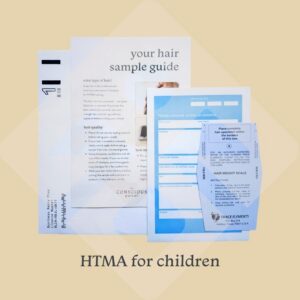
Hair Tissue Mineral Analysis (HTMA)
Hair Tissue Mineral Analysis for Children (HTMA)
£90.00
Choose options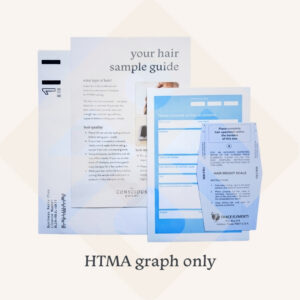
Hair Tissue Mineral Analysis (HTMA)
Hair Tissue Mineral Analysis (HTMA) – GRAPH ONLY
£75.00
Choose options


more topics in Health & Testing
Back to Health & Testing
Hair tissue mineral analysis HTMA
For people who need a starting point, create a test baseline, or to retest over time.

HTMA for children’s health
Rather than viewing childhood health in isolated parts, we believe it should be understood as an interconnected system.

HTMA for women’s health
A woman’s body moves through natural seasons of change, from fertility and pregnancy to postpartum, perimenopause, and menopause.

Naturopathic nutrition support
For people who want full practitioner support for health.
Supplements and support
Supplements have their place, but they are never the whole story.

Mineral Balancing & HTMA Consultation
A food-first guide to the minerals the body relies on, for adults and children.


Not sure where to begin?
For some people, the test itself is the right starting point.
Find your starting point